Key takeaways
- Lena was installed in 1983 at Mississippi Canyon block 280 in about 1,000 feet of water, produced for roughly 33 years, ceased production in 2016 and was toppled in place on 3 July 2020.
- The jacket stood 1,078 feet and weighed 27,000 tons. With topsides and drilling rig the structure reached about 1,300 feet — taller than the Empire State Building's roofline.
- Reefing removes the tow and the shore disposal scope. It does not remove well plugging, conductor removal, topsides removal, severance, survey or site clearance.
- Approval followed years of coordination between the regulator, the operator and the Louisiana Department of Wildlife and Fisheries. The gap between shut-in and toppling was about four years.
A structure taller than the Empire State Building is still on the seabed of the Gulf of Mexico, on purpose.
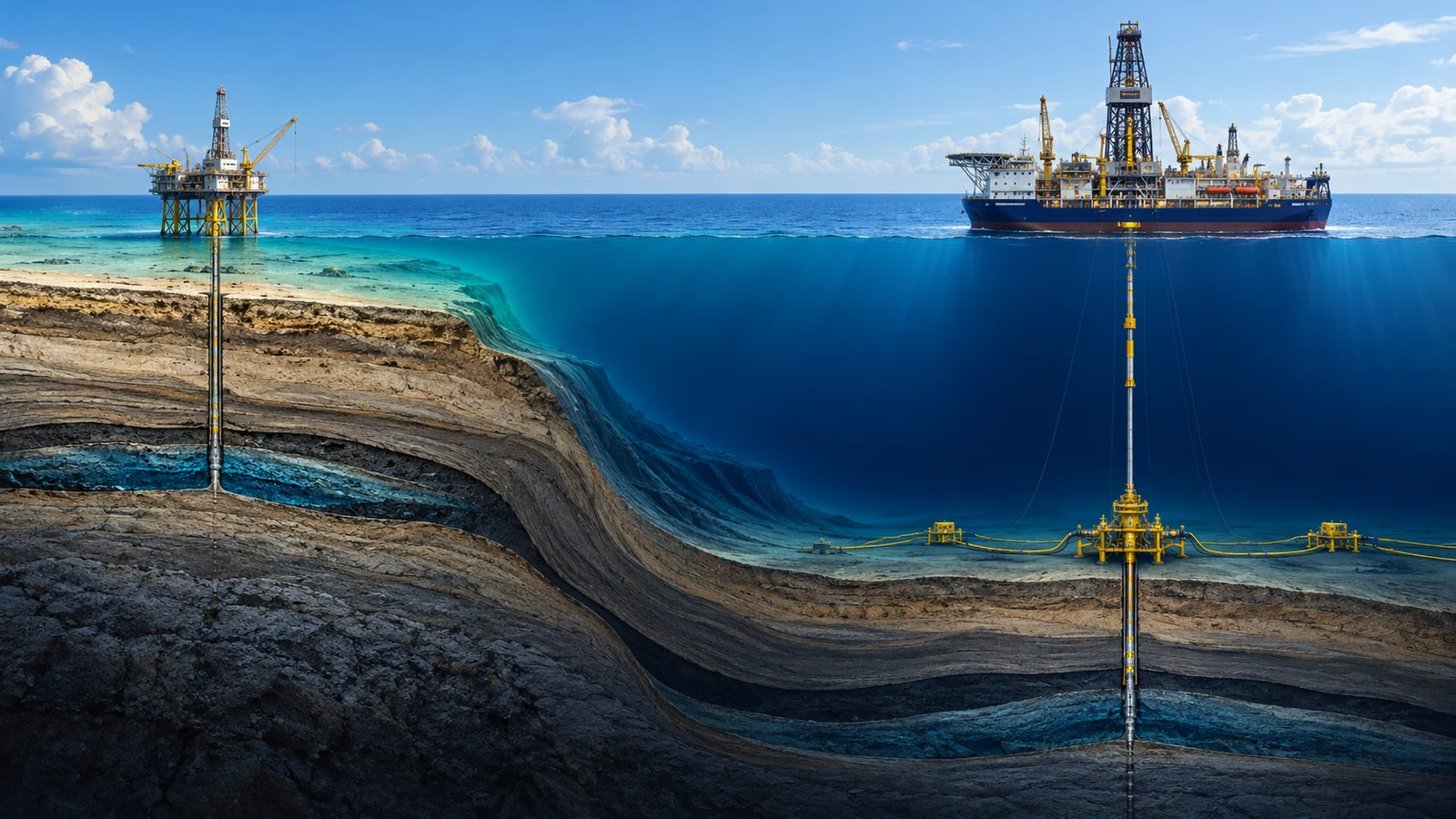
ExxonMobil’s Lena Compliant Tower was installed in 1983 at Mississippi Canyon block 280, about 50 miles southeast of Grand Isle, Louisiana, in roughly 1,000 feet of water. It was the first cable-stabilized — guyed — production platform in the Gulf. The jacket stood 1,078 feet and weighed 27,000 tons; with the topsides and drilling rig included, the structure reached about 1,300 feet.
It produced for roughly 33 years. Production stopped in 2016. On 3 July 2020, the jacket was toppled in place and became the tallest oil and gas platform in the Gulf ever converted into a reef under the Rigs-to-Reefs programme.
We have written about what actually happens to removed Gulf platforms. Lena is the case that tests the general rule, because its numbers are at the edge of what the programme has ever handled.
The timeline is the lesson
Shut-in in 2016. Toppled in July 2020. Roughly four years.
That interval is the single most commercially useful fact in the story, and it is the one least often repeated. BSEE approved the reefing after several years of coordination between the bureau, the operator and the Louisiana Department of Wildlife and Fisheries — the state agency that would take the structure into its artificial reef programme.
For a contractor, four years between cessation of production and execution is neither unusual nor avoidable. It is the regulatory and interagency path showing up as calendar time. A reefing application is not a removal application with a different ending; it requires a receiving state programme, an environmental and navigational assessment, a donation arrangement and an agreed site.
Production ceased in 2016. The structure moved in 2020. Anyone forecasting reefing work from a shut-in date needs a multi-year horizon.
This is the same pattern we described for the Idle Iron clock: the regulatory trigger and the execution date are separated by a process, and the process is where the work is sold.
What reefing removes from the scope
The commercial argument for reefing is real. Toppling in place eliminates two expensive phases.
The tow. A 27,000-ton jacket does not go to shore cheaply. Transporting a structure of that size requires a heavy-lift or launch-barge spread, favourable weather windows and a receiving facility.
Shore disposal. Dismantling, cutting to size, scrap handling and documented disposal all disappear. So does the onshore yard capacity constraint, which is a genuine bottleneck in a busy removal year.
Those two savings are why the programme exists in commercial terms, and why reefing is routinely described as converting a liability into an asset.
Get the next Gulf decommissioning case study by email.
One email when a new report, case study or data feature goes live. No sales follow-up. Unsubscribe any time.
What reefing does not remove
This is where estimates go wrong, and where service companies lose scope they should have bid.
Reefing changes the fate of the jacket. It does not change the obligations that sit around it:
- Well plugging and abandonment. Every well is still permanently plugged to the requirements of 30 CFR 250.1715, with the same plug intervals and the same integrity tests.
- Conductor removal. Still required, as a separate scope with its own equipment.
- Topsides removal. The deck, modules, drilling rig and equipment come off and go to shore. Only the jacket stays.
- Cleaning and preparation. Hydrocarbon removal, flushing and verification that nothing remains that would make the structure unsuitable as a reef.
- Severance and toppling. The jacket has to be cut and laid over in a controlled operation. On a guyed tower, the guy wires and anchors are their own engineering problem.
- Pipelines and umbilicals. Connected lines follow their own path under Subpart Q, as covered in our pipeline analysis.
- Survey and site clearance. The site still has to be verified and certified. Reporting on Lena noted that ownership transfer to the state was expected only after the site was surveyed and cleared.
Count the scopes that survive. Reefing removes two phases out of roughly eight. A supplier that hears “this one is being reefed” and stops qualifying the account has just conceded six scopes.
Why the structure type matters
Lena was a compliant tower, and that is not a detail.
A compliant tower is designed to flex rather than resist. Lena was cable-stabilized: guy wires and anchors held it in position in 1,000 feet of water, which is deeper than a conventional fixed jacket of the era could economically reach. That design is precisely why the structure was a candidate for reefing at this height — and why the toppling operation was an engineering exercise rather than a routine severance.
It also explains the ecological argument that was made for it. The project’s stated aim was to preserve the structure’s ability to support life, including deepwater corals and encrusting organisms that had colonised it over three decades, and the other marine life those attract. A 1,078-foot jacket in 1,000 feet of water presents a vertical habitat column that a flattened shelf jacket does not.
For a service company, the transferable point is about classification. Our standing-structure scope analysis counts structures, but a caisson, a fixed jacket, a compliant tower and a floating facility imply entirely different methods, vessels and engineering. A structure count that does not carry structure type is not yet a market view.
Where reefing sits in the programme
Reporting around the Lena project noted that BSEE had approved more than 500 Rigs-to-Reefs projects in the Gulf since the programme began in 1987, with 47 approvals in the three years before Lena.
Two readings follow, and both are worth holding at once.
The programme is established and substantial — several hundred structures over nearly four decades. And it is a minority outcome. Against the standing-structure inventory, a few dozen approvals in three years is a modest share of the removal pipeline. Reefing is a real option, not the default.
So the right commercial question is not “will reefing take this work away?” It is “for this specific structure, is reefing plausible, and if so which of my scopes survive?”
A qualification stack for a possible reefing candidate
- Structure type and height. Caisson, fixed jacket, compliant tower? What is the jacket weight and elevation?
- Water depth. Does the site leave adequate clearance after toppling, and does the depth support the habitat argument?
- State programme. Is there a receiving state artificial reef programme, and has coordination started?
- Navigational and fishing assessment. Would the reefed structure interfere with navigation, commercial fishing or other OCS uses?
- Donation and transfer. What is the arrangement, and what conditions attach — Lena’s transfer was expected only after survey and clearance.
- Surviving scopes. Which of plugging, conductors, topsides, cleaning, severance, pipelines and clearance remain, and who holds them?
- Timeline. How long since cessation of production? Lena’s interval was about four years.
- Evidence. Is there an approved application, or is reefing still an aspiration in a conversation?
The honest version of “liability into asset”
The phrase is accurate and incomplete. Reefing converts a disposal cost into a habitat outcome and a state partnership. It does not convert an obligation into nothing.
What Lena demonstrates is that the Gulf’s reefing route can absorb a 27,000-ton, 1,078-foot structure in 1,000 feet of water — and that doing so took years of coordination and left most of the decommissioning work intact. Both halves of that sentence are the commercial story.
For contractors qualifying a structure where reefing is on the table, the useful output is a scope map: what goes, what stays, who approves it, and when. That is the shape of a one-off Opportunity Brief.
Sources
- Bureau of Safety and Environmental Enforcement, "World's First Cable-Stabilized Platform Becomes Tallest Structure to be Converted to Artificial Reef in the Gulf of Mexico".
- Journal of Petroleum Technology (SPE), "ExxonMobil Platform Becomes Tallest Structure Converted to Artificial Reef in the Gulf of Mexico".
- Offshore Magazine, "ExxonMobil's Lena platform jacket reefed in the Gulf of Mexico" — installation year, block, water depth and structure dimensions.
- Bureau of Safety and Environmental Enforcement, Rigs-to-Reefs programme.
- Electronic Code of Federal Regulations, 30 CFR Part 250, Subpart Q — Decommissioning Activities, including §250.1715 on permanent well plugging.
- Programme-scale figures (more than 500 approvals since 1987; 47 in the three years before Lena) and the expected state transfer are as reported in coverage of the project, including this account citing BSEE; treat them as reported figures rather than a current programme count.
Put this to work
Track the opportunities behind the analysis.
Gulf decommissioning opportunities identified in monitored BSEE records, ranked by commercial priority and refreshed daily. Or validate a single pursuit with a $19 brief.
GOMDecom aggregates public regulatory data for informational purposes. Figures quoted from third parties are attributed in the text; verify against the cited source before acting. Nothing here is legal, investment or procurement advice.